The Real Opposite

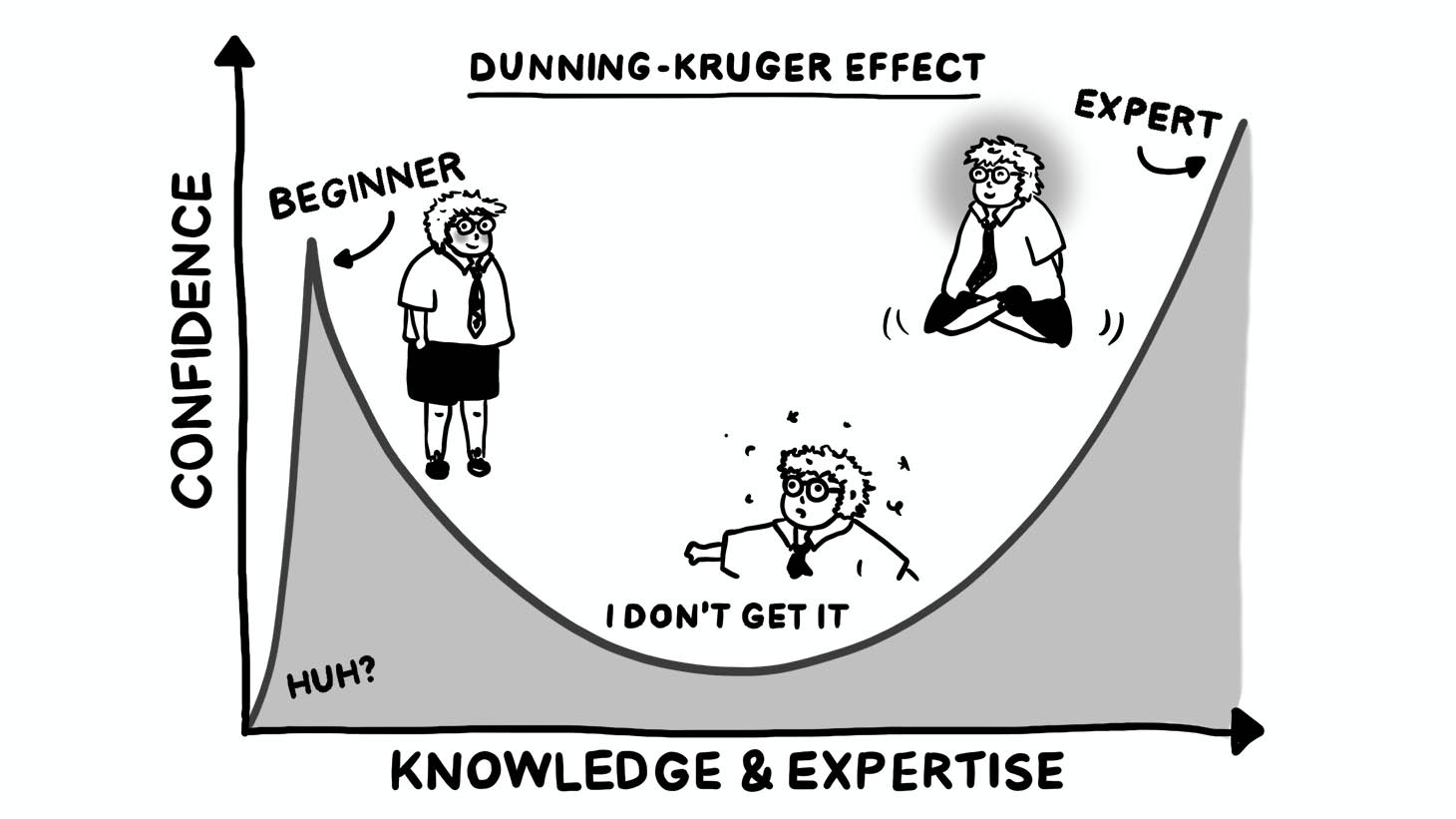
A friend sent me the actual definition of reverse imposter syndrome, and it turns out it is the exact opposite of what I thought—and apparently, many people believe we’re worse than everyone else doing the same thing.
According to AI, this is it:
Reverse imposter syndrome is an informal term often used to describe an overestimation of self-worth, similar to the Dunning-Kruger effect. Unlike normal imposter syndrome (doubt despite success), people with this condition mistakenly believe they are a gift from God, even though they are only marginally competent.
It is not what we have.
It reminds me of Kees. Kees was a boy next door whom I sometimes walked home from school with. Kees was a grade ahead of me, and he always told me how good he was in school. He usually got A’s and sometimes a B, and then he’d be very disappointed. I believed him unquestioningly. In fourth grade, he had to repeat the year, and I ended up in his class.
On one of our walks home, I asked him how that could be. Wasn’t he always so good?
Yes, he assured me, he was still very good, but because his grades had dropped from a ten (the very highest) to an eight (still excellent), they decided he had to repeat the year.
(In the Netherlands, our grades go from 1 to 10. 1 is very bad, and 10 is excellent.)
Once again, I believed him.
But I soon noticed that he couldn’t study at all; he had tremendous trouble with material he’d already learned once.
Kees had reverse imposter syndrome.
Today, during class at the gym, I also felt a bit of that reverse imposter syndrome, but I’m telling the truth when I write that it didn’t bother me.
I wasn’t the worst today. On the contrary, with some exercises, I was the best. With the Superman*, for example.
The Superman exercise is an effective “core stability” exercise that strengthens the lower back, glutes, and hamstrings by lying on your stomach and simultaneously lifting your straight arms and legs off the ground, like a flying superhero. It improves posture, reduces back pain, and requires no equipment.
Lie on your stomach on a mat with your arms extended in front of you and your legs straight behind you.
Tighten your abdominal and gluteal muscles. Simultaneously lift your arms, chest, and legs a few centimeters off the ground.
Posture: Look at the floor to keep your neck in a straight line with your spine.
Hold: Hold this position for 3 to 5 seconds, breathing calmly.
Return: Lower your arms and legs in a controlled manner.
Repetitions: Do 10–15 repetitions in 2–3 sets.